
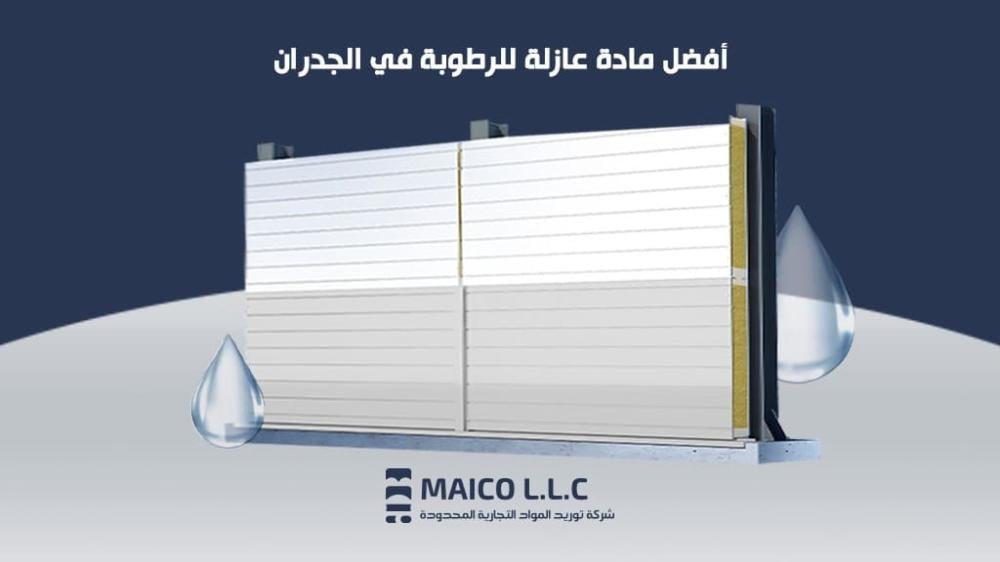
The best moisture-resistant insulation material for walls is not merely a technical choice; it is the first line of defense in protecting your home from damage, mold, and unpleasant odors. In an environment where exposure to moisture is increasing, whether due to rain or internal leaks, choosing the right insulation material becomes an essential step to preserve the integrity and appearance of your walls.
In this comprehensive guide, we review the most important types of insulation materials, how to choose the most suitable option, and the key practical tips for insulating walls from the inside and outside. We also highlight the role of specialized companies such as Maico in providing professional solutions that last for years.
Contact us to learn more about the best sandwich panel supplier!
What Is the Best Moisture-Resistant Insulation Material?
The best moisture-resistant insulation material is sandwich panel wall systems for anyone suffering from leaks or damp spots on walls. Moisture is not only an unpleasant visual issue; it may also cause structural deterioration and the growth of mold that can be harmful to health.
Therefore, using wall moisture insulation materials correctly can solve the problem from its roots and provide long-term protection for the building. Moisture insulation materials vary between cementitious, bituminous, and polyurethane systems, and each type has specific properties suitable for different environments.
If you are looking for sustainable and effective solutions, interior wall moisture insulation using high-quality materials is a reliable option. For walls exposed to weather conditions, it is recommended to choose materials with high water resistance, such as bituminous waterproofing or polyurethane insulation.
Maico provides professional services in this field, using the latest technologies and the strongest internationally approved materials. Through its long experience, Maico offers customized solutions for every case, making it a trusted choice for anyone looking for effective wall moisture solutions without random trials or repeated repairs.
Also read: Sandwich Panel Factories: The Ideal Solution for Thermal Insulation in Saudi Arabia 2025
Types of Moisture Insulation Materials
The type of insulation varies depending on the nature of the wall, whether internal or external, the level of moisture, and the type of construction. Here are the most common options:
Cementitious Waterproofing
One of the most widely used solutions for interior moisture insulation. It is easy to apply and is commonly used in bathrooms, kitchens, and basements.
Bituminous Waterproofing — Rolls or Coating
Highly effective in resisting water and is used on external walls and roofs. It is ideal for areas exposed to rain or groundwater.
Polyurethane Insulation
Considered one of the best moisture insulation materials due to its high ability to insulate against water and air. However, it requires specialists for proper application.
Acrylic Waterproofing
An excellent option for interior walls. It combines an aesthetic finish, ease of application, and good resistance to moderate moisture.
In conclusion, sandwich panel walls are considered the best option overall. They provide thermal insulation, quick and easy construction, easy dismantling and reinstallation, lightweight structure, sound insulation, smooth and rust-resistant surfaces, as well as fire resistance.
Also read: Best Types of Waterproof, Heat-Insulated, and Fire-Resistant Roof Panels – Your Complete Guide
Comparison Between the Best Moisture Insulation Materials: Which Is Best for You in Terms of Quality and Cost?
Here is a comparison between the main insulation materials in terms of moisture resistance, durability, ease of application, relative cost, and best use:
- Interior walls and bathrooms:
- Moisture resistance is low, durability is acceptable, application is moderately easy, relative cost is good, and the most suitable use is cementitious waterproofing.
- External walls and roofs:
- Moisture resistance is medium, durability is medium, application is long-lasting, relative cost is excellent, and the most suitable use is bituminous waterproofing.
- Roofs and walls heavily exposed to water:
- Moisture resistance is high, application is complex and requires specialists, durability is very long, relative cost is very high, and the most suitable use is polyurethane insulation.
- Relatively dry interior walls:
- Moisture resistance ranges from low to medium, application is very easy, durability is medium, relative cost is good, and the most suitable use is acrylic waterproofing.
- Industrial or highly humid areas:
- Moisture resistance is high, application difficulty is medium, durability is long, relative cost is excellent, and the most suitable use is epoxy insulation.
Maico’s advice: Do not depend on price alone when choosing an insulation material. Instead, choose the solution that suits the building environment and its level of exposure to moisture. Our experts at Maico are ready to help you choose the ideal solution at the best possible cost.
Why Do You Need to Insulate Walls Against Moisture Using Sandwich Panels?
Moisture in walls is not only a cosmetic problem; it also threatens the safety of the building and the health of residents. It can cause paint peeling, mold growth, and unpleasant odors that may affect breathing.
For this reason, choosing the best moisture-resistant insulation material is not a luxury, but a necessity, especially in humid environments or old homes.
Maico has extensive experience and excellence in sandwich panel insulation solutions. If you are looking for guaranteed results in wall moisture insulation, Maico provides advanced and practical solutions using internationally approved materials and a highly trained team.
Also read: Price per Meter of Sandwich Panels for Sale in Saudi Arabia 2025
Can Moisture Be Insulated from the Inside Only?
Yes, moisture can be insulated from the inside only in some cases, especially when it is difficult to access the external side of the walls.
This method is commonly used in lower-floor apartments or shared walls. However, it must be carried out carefully by choosing the best moisture-resistant insulation material to ensure effective results.
Here are the key points that explain how to insulate walls from moisture from the inside:
- Use the best moisture-resistant insulation materials, such as cementitious membranes or waterproof polymer coatings.
- Apply wall waterproofing before final finishing to prevent moisture leakage.
- Choose moisture insulation materials suitable for interior walls, such as bituminous insulation, insulation boards, or liquid-applied materials.
- Make sure to treat wall moisture first using materials resistant to fungi and mold.
- Install an insulation layer behind the interior wall as one of the effective moisture solutions.
- Ensure good ventilation to prevent the accumulation of internal water vapor.
- Use moisture-resistant finishing materials as an additional protective layer.
In cases of major water leakage, it is preferable to consult a specialist to determine the best method for insulating walls against moisture from the inside.
How to Insulate Walls Against Moisture Using Sandwich Panels
Proper wall moisture insulation requires carefully planned steps and the use of suitable materials to ensure long-term protection.
The method varies according to the type of wall and the source of moisture. Therefore, it is important to choose the best moisture-resistant insulation material, such as sandwich panels.
Here are practical steps that explain how to insulate walls from moisture effectively:
- Identify the source of moisture first, whether it comes from outside or inside, to ensure successful wall moisture treatment.
- Clean the wall thoroughly from dirt, peeling paint, and mold before starting any insulation process.
- Use suitable moisture insulation materials, such as bitumen, cementitious membranes, or polymer-based insulation.
- Apply a waterproofing layer to the walls using water-resistant coatings or insulation boards.
- Choose high-efficiency materials to ensure interior wall moisture insulation if external insulation is not possible.
- Install an additional layer of gypsum board or dry boards after completing the insulation to increase protection.
- Provide proper ventilation and reduce condensation in closed rooms as one of the effective moisture-control solutions.
- Conduct regular wall inspections after insulation to ensure its effectiveness and prevent new moisture leakage.
Also read: Best Sandwich Panel Installation Companies in 2025 – Maico
Treating Moisture in Old Walls with the Help of Maico
Treating moisture in old walls requires a careful inspection of the condition and identifying the causes of damage before starting any repair work.
Old walls are usually more vulnerable to cracking and water leakage. Therefore, effective moisture solutions must be used to ensure long-lasting protection.
Here are the steps for treating moisture in old walls using suitable materials:
- Remove damaged paint or plaster completely to reach the original wall surface.
- Clean the walls from salts and mold to ensure proper adhesion of the insulation materials.
- Use the best moisture-resistant insulation material, such as cementitious membranes or bitumen, to insulate affected walls.
- Choose moisture insulation materials suitable for old walls, such as liquid insulation or moisture-resistant dry boards.
- Apply a wall waterproofing layer to prevent water leakage from outside or from beneath the floor.
- Carry out interior wall moisture insulation if external insulation is difficult, using waterproof coatings or water-resistant boards.
- Ensure proper ventilation of interior spaces to reduce condensation and improve insulation efficiency.
- Perform periodic maintenance to confirm the effectiveness of the wall moisture treatment and prevent the problem from recurring.
Maico’s expertise stands out in providing customized solutions for old buildings without the need for demolition or major design changes. Do not hesitate to contact us through the following:
Mobile: +966551466334
Email: [email protected]
When Should You Consider Insulation from Maico?
It is recommended to consider insulation as soon as the first signs of moisture appear, such as peeling paint, dark spots on walls, or even a slight mold smell inside the house.
These signs indicate that moisture has penetrated the walls, which requires quick intervention.
At this stage, the importance of choosing the best moisture-resistant insulation material, such as sandwich panels, becomes clear, along with understanding the types of moisture insulation materials suitable for each case.
Understanding how to insulate walls against moisture is also essential to prevent the problem from getting worse, especially on ground floors or in areas exposed to severe climate changes.
The earlier the diagnosis, the more effective and less costly the wall moisture treatment will be in the long term.
How Much Does Wall Moisture Insulation from Maico Cost? And Why Do Prices Vary?
When considering wall moisture insulation, the first question is often: “How much does this process cost?” The truth is that insulation costs vary significantly depending on several key factors, including:
- The type of insulation material used, such as bitumen, polyurethane, or cementitious waterproofing.
- The area of the wall to be insulated. The larger the area, the higher the cost.
- The current condition of the walls and whether they require treatment before insulation.
- Whether the insulation is applied internally or externally.
- Labor costs and execution quality.
For this reason, specialized companies such as Maico stand out by providing accurate studies of each building’s condition and determining the cost after an on-site inspection. This helps the client make the right decision without surprises or unexpected additional costs.
If you are looking for a balance between quality and cost, choosing an experienced company like Maico ensures a smart investment that protects your home from moisture for many years.
When looking for effective solutions for wall moisture, do not settle for temporary fixes. Make sure to use high-quality materials and apply them professionally.
If you want lasting results and reliable service, Maico is considered a leading choice in the Kingdom in the field of wall waterproofing, thanks to its extensive experience and customer satisfaction.
Frequently Asked Questions About the Best Moisture-Resistant Insulation Material for Walls
Does insulation completely prevent mold?
Insulation can significantly reduce the chances of mold appearing, but it does not prevent it completely.
Mold grows under certain conditions, such as moisture and heat. Therefore, good insulation reduces moisture penetration into the building.
However, if there are leaks or other problems such as poor ventilation, mold may still appear even with good insulation. That is why it is necessary to maintain an appropriate humidity level and adequate ventilation to protect against mold.
What is the difference between waterproofing and thermal insulation?
Waterproofing aims to prevent water and moisture from entering buildings. It is usually used in areas exposed to moisture, such as roofs and lower walls.
Thermal insulation, on the other hand, aims to reduce heat transfer, which helps maintain a comfortable indoor temperature and reduce energy consumption.
Different materials can be used for both types. For example, polyurethane is used for thermal insulation, while special membranes are used for waterproofing.
Both types are essential to ensure a healthy and comfortable indoor environment.
Is the cost of insulation high?
The cost of insulation varies depending on the type of insulation used, the size of the area to be insulated, and the type of materials used.
In general, the initial cost of insulation may be high, but it is considered a long-term investment because it helps reduce energy bills and improve home comfort.
In addition, lower maintenance costs over the long term can help offset the initial expenses.